Adjectives are very important words in English. We use them every day in speaking and writing. They help us to describe people, places, things, and feelings. Without adjectives, our sentences would be plain and boring.
This article will help you learn 500 common adjectives in English. It also shows you how to use them in simple sentences. Whether you are a beginner or improving your English, this list will be helpful for you.
Why Learn Adjectives?
Learning adjectives helps you:
- Speak more clearly and with more detail
- Make your writing more interesting
- Describe things, people, and situations
- Express your feelings better
For example:
- The boy is happy. (The word happy tells us about the boy.)
- She has a big house. (The word big tells us the size of the house.)
What Are Adjectives?
Adjectives are words that describe nouns (people, animals, places, or things). They give more information about the noun.
Examples:
- The weather is cold → (cold tells us about the weather)
- This is a beautiful dress → (beautiful tells us about the dress)
- He is a smart student → (smart tells us about the student)
- The car is fast → (fast tells us about the car)
- I had a delicious meal → (delicious tells us about the meal)
500 Adjectives List
We have divided the adjectives into groups to make it easier for you to learn.
Adjectives for Feelings and Emotions
- happy
- sad
- angry
- excited
- nervous
- calm
- tired
- bored
- scared
- proud
- friendly
- shy
- cheerful
- upset
- worried
- relaxed
- lonely
- joyful
- loving
- brave
- grateful
- hopeful
- kind
- jealous
- confident
- annoyed
- peaceful
- sleepy
- surprised
- energetic
- embarrassed
- frustrated
- miserable
- caring
- lazy
- curious
- quiet
- silly
- thoughtful
- disappointed
- moody
- emotional
- serious
- selfish
- fearless
- gentle
- rude
- playful
- stubborn
- serious

Adjectives for Appearance and Looks
- tall
- short
- thin
- fat
- handsome
- beautiful
- ugly
- strong
- weak
- clean
- dirty
- messy
- neat
- stylish
- smart
- elegant
- pretty
- plain
- bald
- hairy
- chubby
- skinny
- dark
- fair
- attractive
- fit
- cute
- glowing
- wrinkled
- neat
- colorful
- pale
- stunning
- glamorous
- well-dressed
- shapely
- freckled
- slim
- polished
- rough
- smooth
- oily
- dusty
- bright
- dull
- radiant
- bulky
- shiny
- silky
Adjectives for Size, Shape & Quantity
- big
- small
- tiny
- huge
- large
- little
- narrow
- wide
- thick
- thin
- tall
- short
- round
- square
- oval
- flat
- deep
- shallow
- full
- empty
- many
- few
- several
- some
- most
- all
- enough
- plenty
- double
- single
- giant
- miniature
- heavy
- light
- narrow
- broad
- massive
- slim
- compact
- long
- short
- oversized
- underweight
- overweight
- crowded
- sparse
- average
- multiple
- countless
- minimum
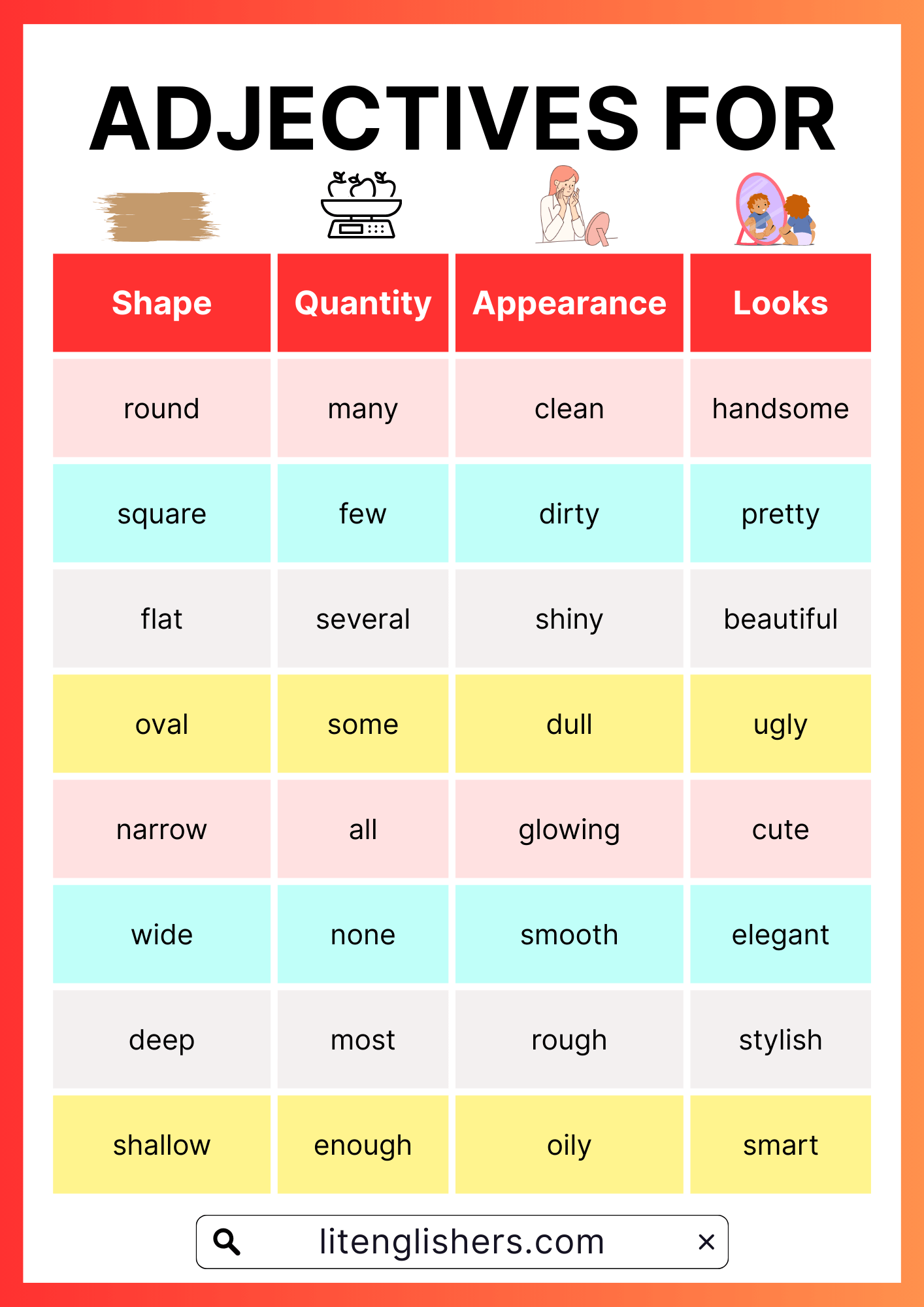
Adjectives for Taste, Smell & Sound
- sweet
- sour
- salty
- bitter
- spicy
- delicious
- tasty
- bland
- fresh
- rotten
- fragrant
- smelly
- clean
- dirty
- strong (smell)
- mild
- loud
- quiet
- noisy
- silent
- musical
- harsh
- soft
- sharp
- deep
- high
- low
- raspy
- clear
- smooth
- smoky
- creamy
- crunchy
- juicy
- burnt
- moldy
- tangy
- flavorful
- greasy
- stale
- fizzy
- icy
- sourish
- sugary
- echoing
- rumbling
- cracking
- melodic
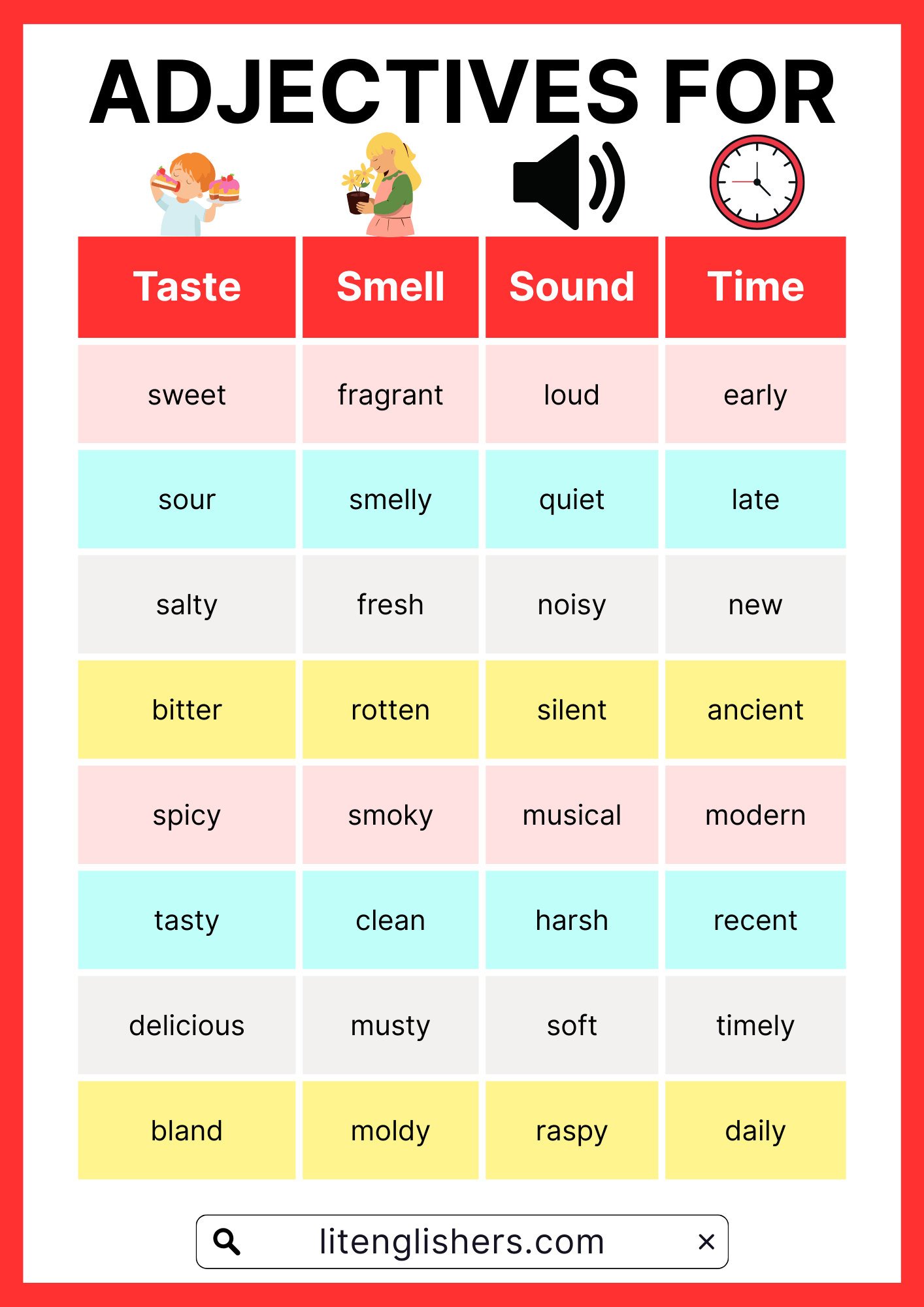
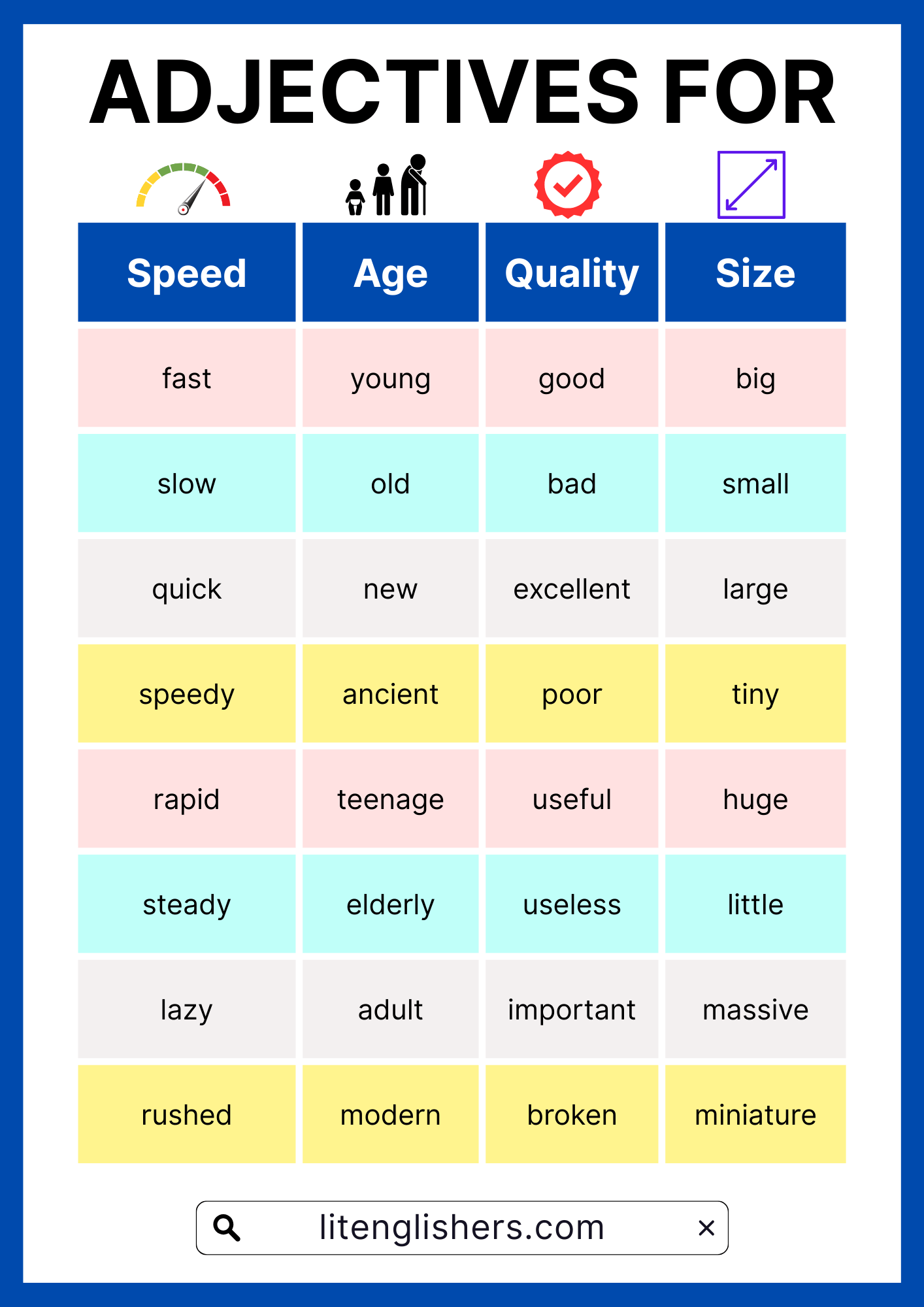
Adjectives for Time, Speed, Age, and Quality
- new
- old
- young
- ancient
- modern
- recent
- fast
- slow
- quick
- early
- late
- timely
- sudden
- daily
- monthly
- yearly
- poor
- rich
- high
- low
- expensive
- cheap
- easy
- hard
- simple
- complex
- useful
- useless
- real
- fake
- important
- unimportant
- valuable
- broken
- working
- frozen
- warm
- cold
- hot
- boiling
- dry
- wet
- clean
- sticky
- slippery
- cracked
- reliable
- sharp
- blunt
- active
- inactive
100 Adjectives Used in Sentences
Here are 100 adjectives from the list above used in simple sentences to help you understand them better:
- She is a happy girl.
- I feel sad today.
- The baby looks cute.
- He is angry with me.
- We had a delicious lunch.
- The room is clean.
- His handwriting is neat.
- The dog is friendly.
- The movie was boring.
- The exam was easy.
- This chair is comfortable.
- He is a smart boy.
- The weather is cold today.
- She wore a beautiful dress.
- That book is interesting.
- My uncle is rich.
- The bed is soft.
- It’s a sunny day.
- My sister is kind.
- That test was hard.
- The soup is hot.
- I feel tired.
- The cat is lazy.
- His answer was correct.
- The baby is noisy.
- The story is funny.
- He is very brave.
- The path is narrow.
- She is jealous of her friend.
- He is tall and strong.
- The cake is sweet.
- My phone is new.
- The box is empty.
- This water is clean.
- The book is old.
- She is a young teacher.
- The car is fast.
- The road is wide.
- My brother is funny.
- This dress is expensive.
- It’s a hot summer day.
- The milk is fresh.
- Her room is always messy.
- The dog looks scary.
- The girl is very polite.
- His shoes are dirty.
- It’s a quiet place.
- That’s a real diamond.
- The building is high.
- The sea looks deep.
- My teacher is strict.
- The story was sad.
- This pen is cheap.
- The food was spicy.
- He is very helpful.
- It’s a peaceful village.
- Her voice is soft.
- The gift is special.
- That was a quick reply.
- He is a hardworking student.
- This song is beautiful.
- The light is too bright.
- His clothes are wet.
- The cake is dry.
- She gave a honest answer.
- The pillow is fluffy.
- The boy is strong.
- The water is cold.
- That was a loud noise.
- The test is simple.
- My bag is heavy.
- The child is very quiet.
- He is curious about everything.
- The flower smells fragrant.
- The news is bad.
- The baby is sleepy.
- She looks confident.
- He has a broken phone.
- The dog is loyal.
- The view is amazing.
- It was a cold night.
- My shoes are tight.
- The teacher is nice.
- The bridge is strong.
- That road is dangerous.
- My jacket is warm.
- The answer was wrong.
- The house is big.
- The story was long.
- This juice is sour.
- The floor is slippery.
- That boy is very naughty.
- She is very gentle.
- This chair is wooden.
- His room is always dark.
- Her handwriting is beautiful.
- The water is boiling.
- The view is wonderful.
- This work is important.
- The ice is frozen.
Adjectives help us describe and express better in English. If you’re learning English, start using simple adjectives in your everyday speech and writing. You don’t need to memorize all 500 words at once. Just try to learn a few new ones each day.
You can make your English sound clear, colorful, and confident just by using the right adjectives. Whether you’re a beginner or moving to the next level, this list is your easy start.
Keep practicing, and slowly you’ll become better at describing the world in English!
Read More
- Words of Noun, Verbs, Adverbs, and Adjectives
- Adjectives with Examples and Types
- Adverbs Definition, Types, and Example Sentences