If you are preparing for competitive English exams, learning antonyms is just as important as learning synonyms. Antonyms help you understand the opposite meaning of a word, which is often tested in MCQs, reading passages, and verbal reasoning sections.
In this blog post, you will learn 100 advanced-level English words commonly used in exams along with their antonyms and visuals (downloadable). Each word is explained in simple language to help you learn faster and more effectively.
Read More: Synonyms for Competitive Exams
What Are Antonyms in English?
An antonym is a word that has the opposite meaning of another word.
→ Example:
Expand → Contract
Here, contract is the antonym (opposite) of expand.
In exams, antonyms are used in sentence completion, vocabulary choice, and error spotting. So knowing the right word pairs is very helpful.
Why Learn Advanced Antonyms for Exams?
→ Improve your vocabulary skills
→ Understand passages better
→ Choose correct answers in MCQs
→ Boost writing & communication level
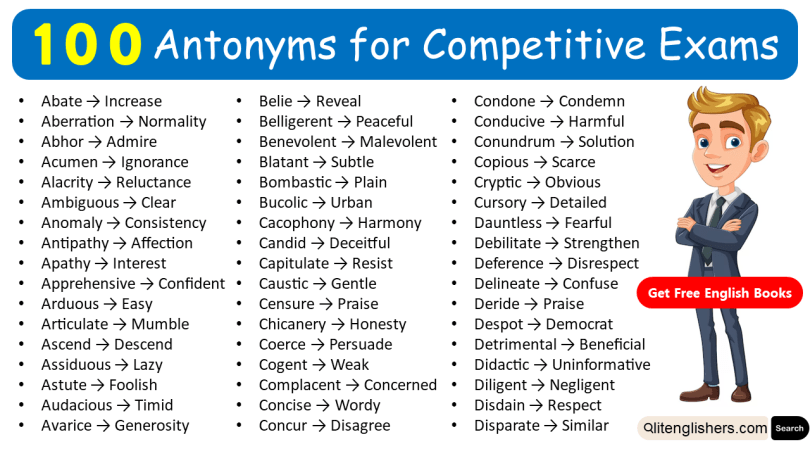
100 Antonyms for Competitive Exams
100 Competitive English Words with Their Antonyms
Below is the list of high-level words with their opposites, perfect for competitive exams:
- Abate → Increase
- Aberration → Normality
- Abhor → Admire
- Acumen → Ignorance
- Alacrity → Reluctance
- Ambiguous → Clear
- Anomaly → Consistency
- Antipathy → Affection
- Apathy → Interest
- Apprehensive → Confident
- Arduous → Easy
- Articulate → Mumble
- Ascend → Descend
- Assiduous → Lazy
- Astute → Foolish
- Audacious → Timid
- Avarice → Generosity
- Belie → Reveal
- Belligerent → Peaceful
- Benevolent → Malevolent
- Blatant → Subtle
- Bombastic → Plain
- Bucolic → Urban
- Cacophony → Harmony
- Candid → Deceitful
- Capitulate → Resist
- Caustic → Gentle
- Censure → Praise
- Chicanery → Honesty
- Coerce → Persuade
- Cogent → Weak
- Complacent → Concerned
- Concise → Wordy
- Concur → Disagree
- Condone → Condemn
- Conducive → Harmful
- Conundrum → Solution
- Copious → Scarce
- Cryptic → Obvious
- Cursory → Detailed
- Dauntless → Fearful
- Debilitate → Strengthen
- Deference → Disrespect
- Delineate → Confuse
- Deride → Praise
- Despot → Democrat
- Detrimental → Beneficial
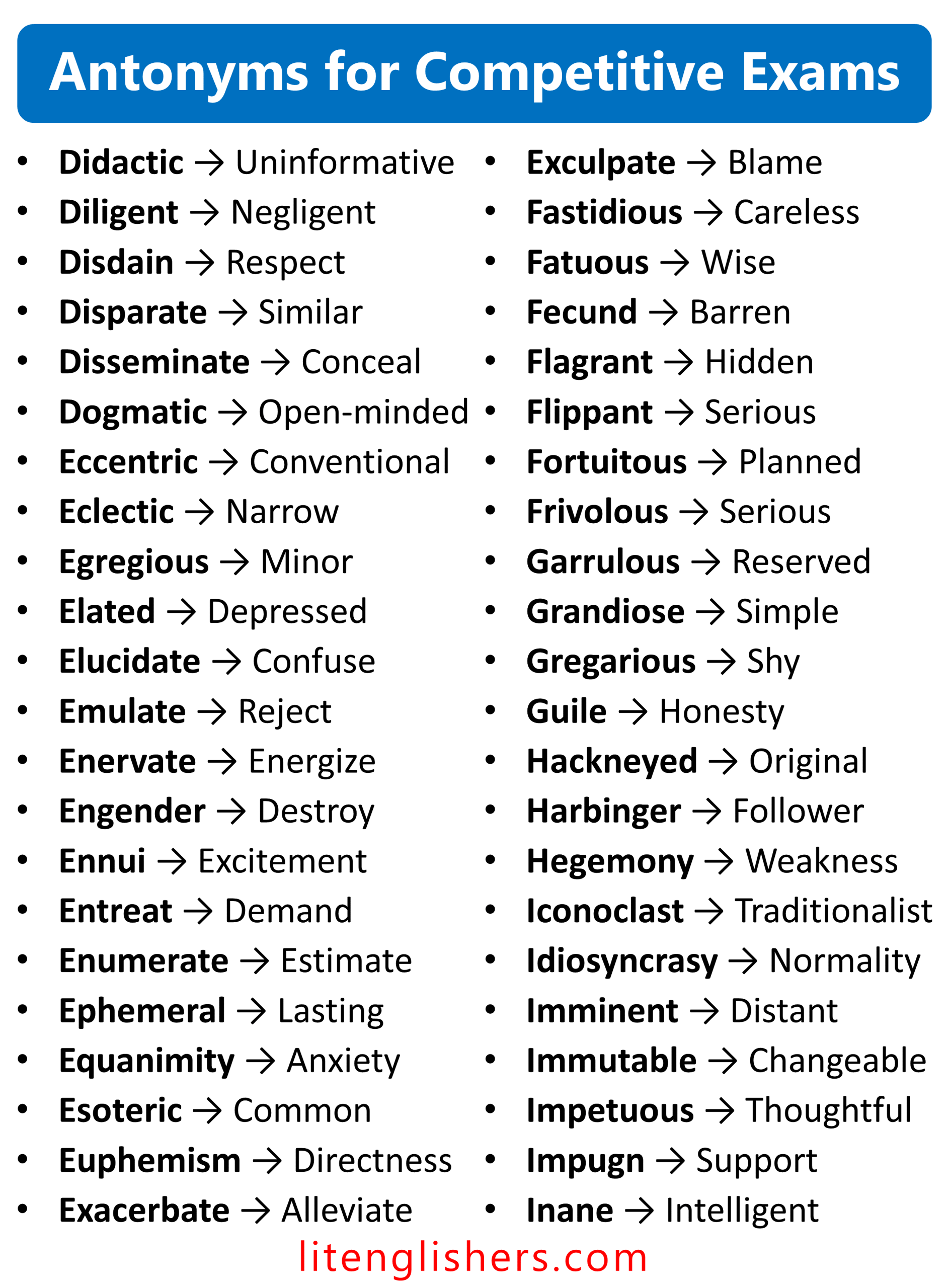
- Didactic → Uninformative
- Diligent → Negligent
- Disdain → Respect
- Disparate → Similar
- Disseminate → Conceal
- Dogmatic → Open-minded
- Eccentric → Conventional
- Eclectic → Narrow
- Egregious → Minor
- Elated → Depressed
- Elucidate → Confuse
- Emulate → Reject
- Enervate → Energize
- Engender → Destroy
- Ennui → Excitement
- Entreat → Demand
- Enumerate → Estimate
- Ephemeral → Lasting
- Equanimity → Anxiety
- Esoteric → Common
- Euphemism → Directness
- Exacerbate → Alleviate
- Exculpate → Blame
- Fastidious → Careless
- Fatuous → Wise
- Fecund → Barren
- Flagrant → Hidden
- Flippant → Serious
- Fortuitous → Planned
- Frivolous → Serious
- Garrulous → Reserved
- Grandiose → Simple
- Gregarious → Shy
- Guile → Honesty
- Hackneyed → Original
- Harbinger → Follower
- Hegemony → Weakness
- Iconoclast → Traditionalist
- Idiosyncrasy → Normality
- Imminent → Distant
- Immutable → Changeable
- Impetuous → Thoughtful
- Implacable → Compassionate
- Impugn → Support
- Inane → Intelligent
- Inchoate → Complete
- Incisive → Vague
- Indolent → Active
- Ineffable → Expressible
- Inimical → Friendly
- Inscrutable → Transparent
- Insipid → Interesting
- Intrepid → Cowardly
- Irascible → Calm
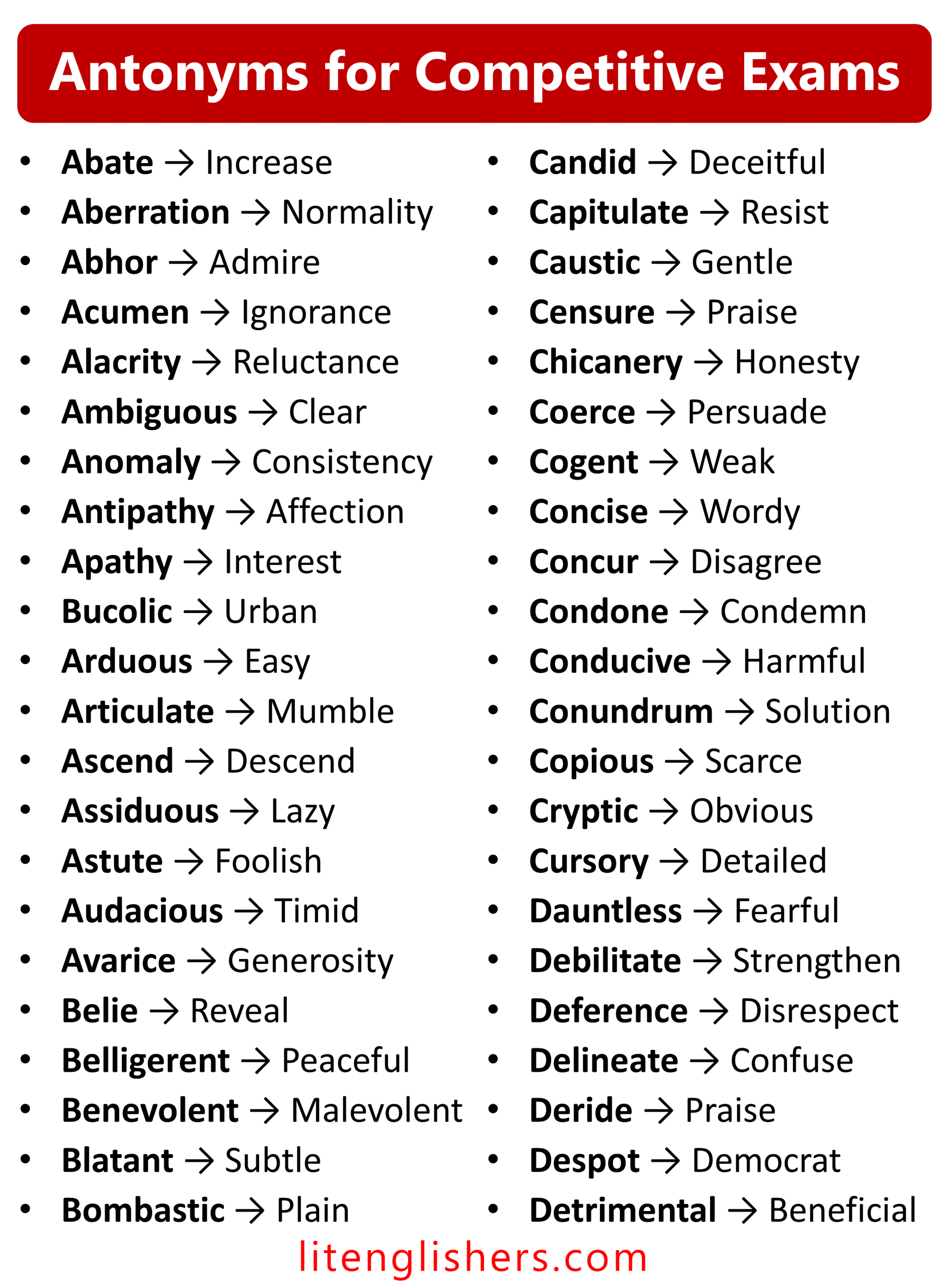
Antonyms for Competitive Exams
Learning competitive antonyms doesn’t need to be boring. If you focus on the right vocabulary and practice regularly, you can master the most difficult English words used in exams.
👉 Tip: Learn 10 antonyms daily and use them in your writing or mock tests.
FAQs – Antonyms for Competitive Exams
Q1: How can I remember antonyms easily?
→ Link the opposite words in real-life situations.
Q2: Are antonyms important for NTS and GAT?
→ Yes, they appear in vocabulary and reading sections.
Q3: Can I use these antonyms in speaking tests too?
→ Yes! It shows depth in your vocabulary.
Q4: Where can I get picture-based vocabulary?
→ Ask below, and I’ll create image charts for your revision.
Read More Helpful Lessons: